
 N5Online & Offline
N4
JLPT N4 — Upper Beginner
Upper beginner — everyday conversation
All coursesJLPT N4 — Upper Beginner
- Duration
- 3 months
- Fee
- Ask us
- Class schedule
- Ask us
- Next batch
- Ask us
- Before you join
- N5, or the equivalent: comfortable with both kana and the basic sentence patterns.
- How it is taught
- Offline and online — your choice
- Class format
- Offline, at our Dhanmondi center. Grammar is explained in Bangla so nothing is lost, and the practice is in Japanese.
- Books & materials
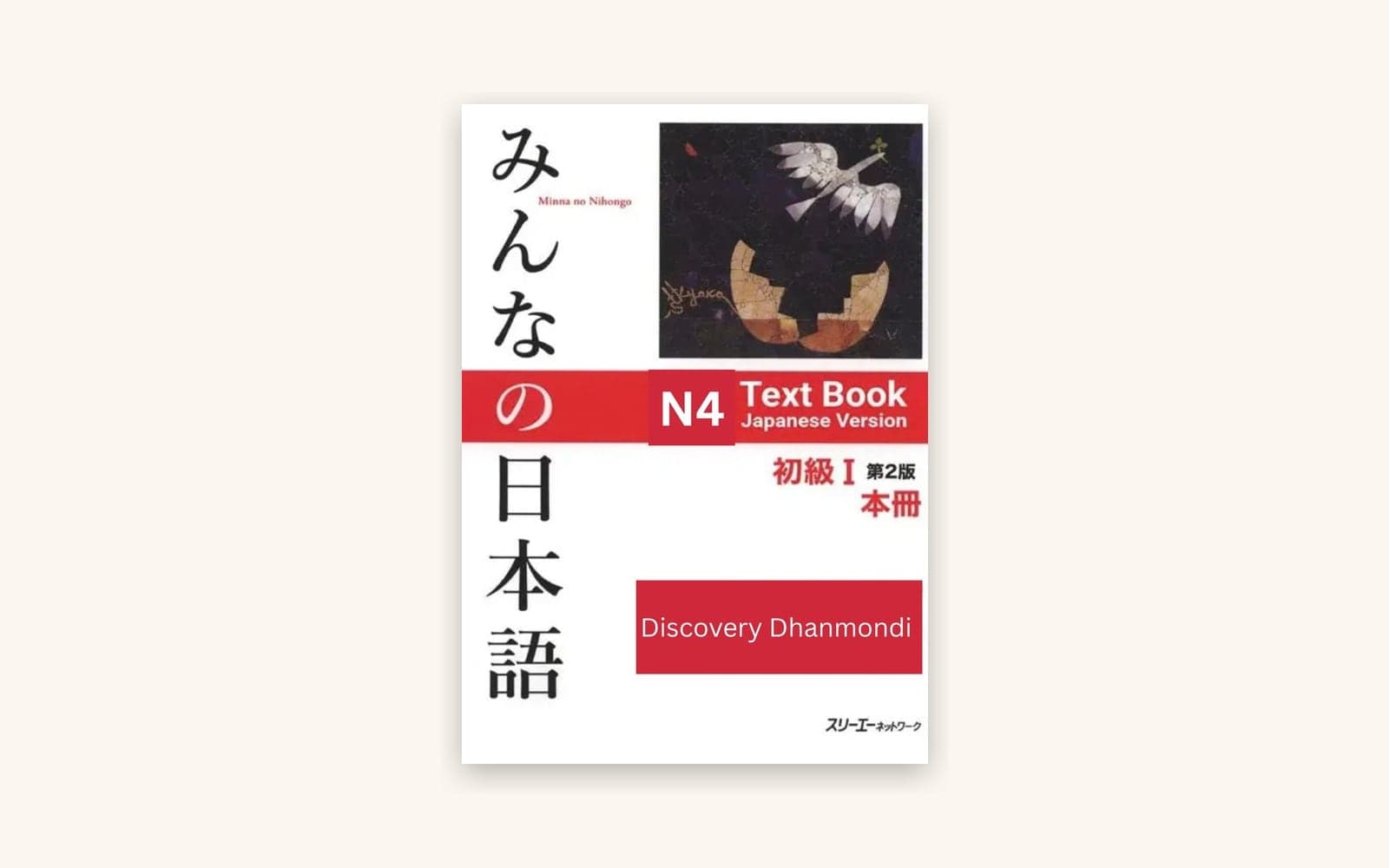
- Standard JLPT preparation textbooks plus our own practice sets and past-paper drills. Ask us which books your batch is using before you buy anything.
- Certificate
- The JLPT certificate is issued by the Japan Foundation and JEES when you pass the exam, not by us — we prepare you for it and help you register. You also get a Discovery course completion certificate.
About this course
N4 is where Japanese starts being useful. The alphabets are behind you, so the work moves to the grammar that ordinary conversation actually runs on — plain forms, connecting sentences, saying what you want, what you can do and what you have to do. By the end you can hold a real conversation about daily life, at a slow speed, and read a short passage without translating every word.
Who this course is for
Students who have finished N5 with us or elsewhere. It is also the level many employers and language schools treat as the first meaningful line on a CV.
What you can do after this course
- Hold a simple conversation about daily life at a slow speed
- Use plain (casual) forms as well as the polite forms from N5
- Read short passages on familiar topics written in basic vocabulary and kanji
- Understand around three hundred kanji in context
- Write short messages, notes and simple descriptions
- Follow slowly spoken conversations encountered in daily life
What the course covers
- 01
Plain form
The casual register everything above N4 assumes you know.
- 02
Joining sentences
The te-form, conditionals, reasons and contrasts.
- 03
Ability, desire and obligation
dekiru, -tai and -nakereba naranai, and their everyday equivalents.
- 04
Giving and receiving
ageru, kureru and morau, and why they matter socially.
- 05
Kanji
Roughly three hundred characters, in the words you will actually meet.
- 06
Listening
Longer dialogues at a slow but natural rhythm.
- 07
Exam practice
JLPT N4 past-paper work in the closing weeks.
The exam
N4 in the JLPT's own words is the ability to understand basic Japanese: to read passages on familiar everyday topics written in basic vocabulary and kanji, and to follow conversations encountered in daily life when they are spoken slowly. The JLPT (Japanese-Language Proficiency Test) is a listening-and-reading test — there is no speaking or writing paper — and it is normally held twice a year, in July and December, with registration closing months before the sitting. We will tell you the current date and the registration deadline, and we help our students register. Ask us before you plan a batch around a particular sitting.
Fee, class times and the next batch
These change from batch to batch, so we do not print them where they would go out of date. Message us and you will have today’s answer within the hour during office hours.
Questions about this course
No. The course is useful on its own, and many students take it to be able to live and work in Japan rather than to collect a certificate. If you do want the exam, tell us early so we can time your batch against a sitting.
These change from batch to batch, so we do not publish them here where they would go stale. Message us on WhatsApp or call the Dhanmondi center and we will tell you the current batch, the timing and the fee the same day.
Our teaching is offline at the Dhanmondi center. Ask us if traveling in is a problem for you and we will tell you honestly what is possible.
Other courses in this group
N5Online & Offline N3Online & Offline
 N2Online & Offline
Ready to start JLPT N4 — Upper Beginner?
Send your details and an advisor from our Dhanmondi center will call you back with the current batch, timing and fee.